The 20-Minute Morning Birding Routine for People With Full-Time Jobs
Twenty minutes is not much. It is one fewer stop on the drive in, a scroll through a phone, half a cup of coffee. But twenty minutes in the same place at first light, repeated most mornings, will put more birds in your notebook than a fortnight of ambitious weekend plans. This routine is built for people who start work at eight or nine and cannot be late. Everything in it fits between the alarm and the car keys.
Set the whole thing up the night before
The routine fails in the morning, not at the park. If your binoculars are in a cupboard under a chess set and your boots are damp in the garage, you will not leave. So do the boring part before bed.
- Binoculars, coat, boots and keys in one pile by the door.
- A thermos filled, or a travel mug ready to fill.
- Your logging method open and waiting — a notes app, a folded index card, whatever you actually use.
- One destination decided, plus a wet-weather backup.
That last point matters more than it sounds. Choosing where to go is the decision that eats the morning. Pick a single default site — a park corner, a canal towpath, a cemetery, the scrubby edge of a supermarket car park — within a ten-minute walk or a five-minute drive of home. Then pick a second one for rain. Once the route is fixed, the only decision left at 5:50 a.m. is whether to get dressed.
Where to stand (and why it isn't the middle of a field)
Beginners walk. Good birders stand.
Find the seam between two habitats: hedge and meadow, woodland edge and pond, mown path and bramble, lawn and reedbed. Birds concentrate along those seams because food, cover and songposts all sit within a few metres of each other. Stand in the open middle of a field and you are a silhouette with nothing behind you, which every bird in the parish will notice.
Three placement rules do most of the work:
- Keep the sun at your back or shoulder. At dawn it is low and directly in your eyes if you face it, and everything in front of you turns into a grey smear.
- Stand still for ninety seconds before lifting binoculars. Let the local birds reset. The first thirty seconds are always quiet; that is not a bad morning, it is a settling period.
- Stay off the skyline and off the path. Tuck yourself beside a bush or a gatepost. And mind access: stay on public rights of way and open access land, use gates properly, and keep your distance from nests and roosts during the breeding season.
Your spot does not have to be beautiful. It has to be reachable, legal, and yours.
The twenty minutes, minute by minute
Here is a shape that fits without rushing. Adjust the proportions if you like; keep the order.
- Minutes 0–2: arrive and listen. No binoculars yet. Stand where you planned to stand, breathe, and take in the sound. Note what is singing and roughly where.
- Minutes 2–7: slow scan. Work the edge left to right, near to far, then back. Lifting binoculars briefly and often beats one long sweep. Check the tops of bushes and fence posts as well as the ground.
- Minutes 7–14: walk a short loop. Ten or fifteen paces, stop, look, listen, repeat. Fifty metres of good habitat is plenty. Movement flushes birds; stopping gets you a proper look at them.
- Minutes 14–18: return to your anchor point. Stand again in the same place. You will pick up species you missed on the way out, especially if the light has improved.
- Minutes 18–20: write it down before you get in the car. Not at your desk, not from memory at lunchtime.
The countdown is the point. A session with an end time is a session you can repeat tomorrow.
Listen first, look second
Dawn belongs to sound. Between first light and full sun, most small birds are singing, and many of them are hidden in leaf. If you spend your twenty minutes only looking, you will see a fraction of what is there.
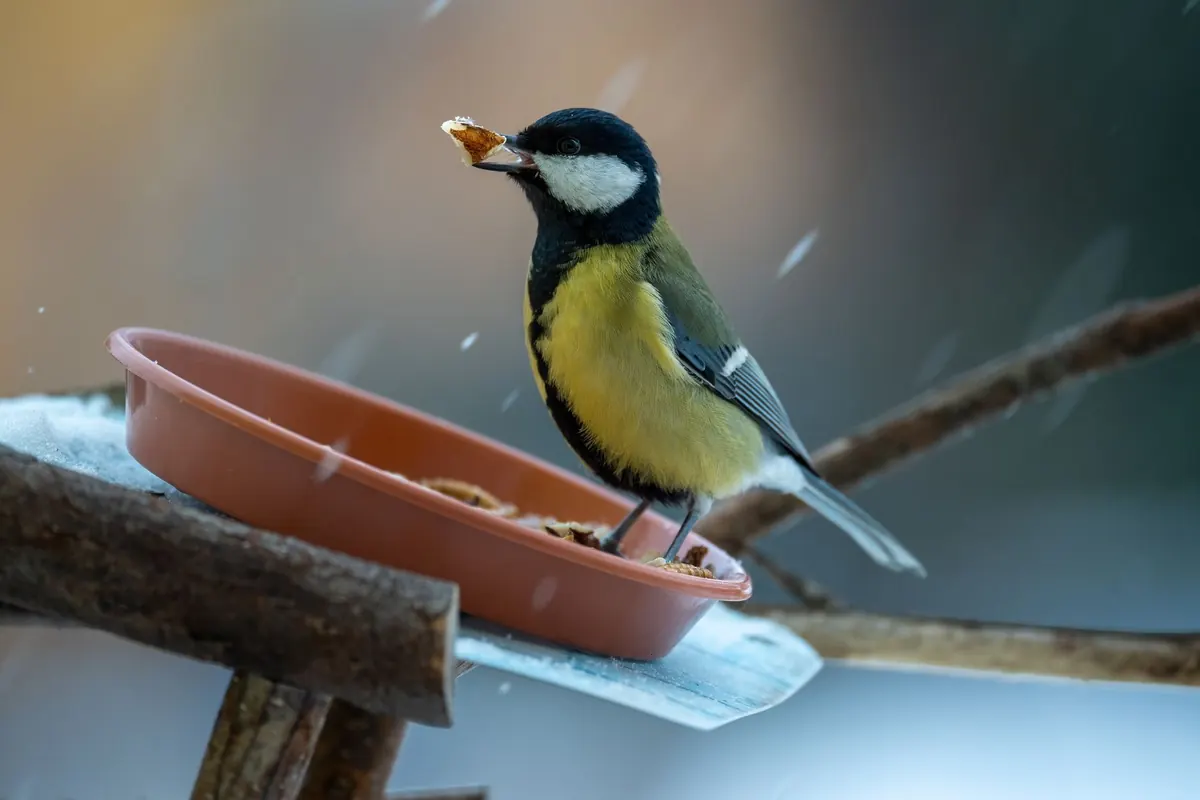
Do not try to learn everything. Learn five songs from your own patch — the ones you hear every single morning — and let them become free information. Once you know the local robin, the wren, the great tit and the two or three others that open the day, the chorus stops being a wall of noise and becomes a list of names. Five songs a season is a realistic target.
Then build the habit of sound-then-find. Hear something unfamiliar, stop, and spend a minute or two locating the singer. That search is where your identification skills actually grow. The birds you see because you hunted them down stick; the ones you look up in an app later tend not to.
Two minutes of logging that is worth keeping
The last two minutes make the whole routine compound. Log the same way every time:
- One list per visit, same site, same order of species if possible.
- Approximate counts rather than vague ones. "Six" is more useful than "several," and honest estimation is fine.
- Mark heard-only birds. A species you identified by voice is still a record, but say so.
- One line of conditions: time, wind, cloud, temperature. It is the line that lets you compare March with May.
Write "unknown warbler, thin rising trill from the hedge" rather than guessing. Six months of those notes will identify more species than any single confident mistake.
When the morning falls apart
Some mornings you will have seven minutes, or three. Keep the seed of the routine anyway. Stand in the doorway or at an open window, listen for two minutes, and write down whatever you hear. A driveway list is still a list. The value is not in the count of species; it is in not breaking the chain.
On dark winter mornings, shift the window forward: the birds are active at first light, whenever that falls, so a session at 7:40 in December does the same job as 5:30 in June. On wet days, listen from the car with the window down at your default site. If you are unwell, or caring for someone who is, skip it without guilt — this is a hobby, and it should never cost you sleep you need.
Make it boring enough to survive February
Same coat, same corner, same twenty minutes. Boring is the mechanism, not the failure. Novelty is what kills streaks; familiarity is what keeps them, because a routine that requires no decisions survives bad weather, busy weeks and low motivation.
What you get in return arrives slowly. After a few weeks you start noticing returns rather than rarities: the same male singing from the same fence post, the first summer visitor back on its usual hedge, the morning the wren goes quiet because the young have fledged. That is the real payoff of a small, unglamorous habit — not a bigger list, but a patch you actually know.
Tonight, put your binoculars by the door. Tomorrow, stand still at the edge for twenty minutes. Then do it again on Thursday.
Photo: cottonbro studio / Pexels