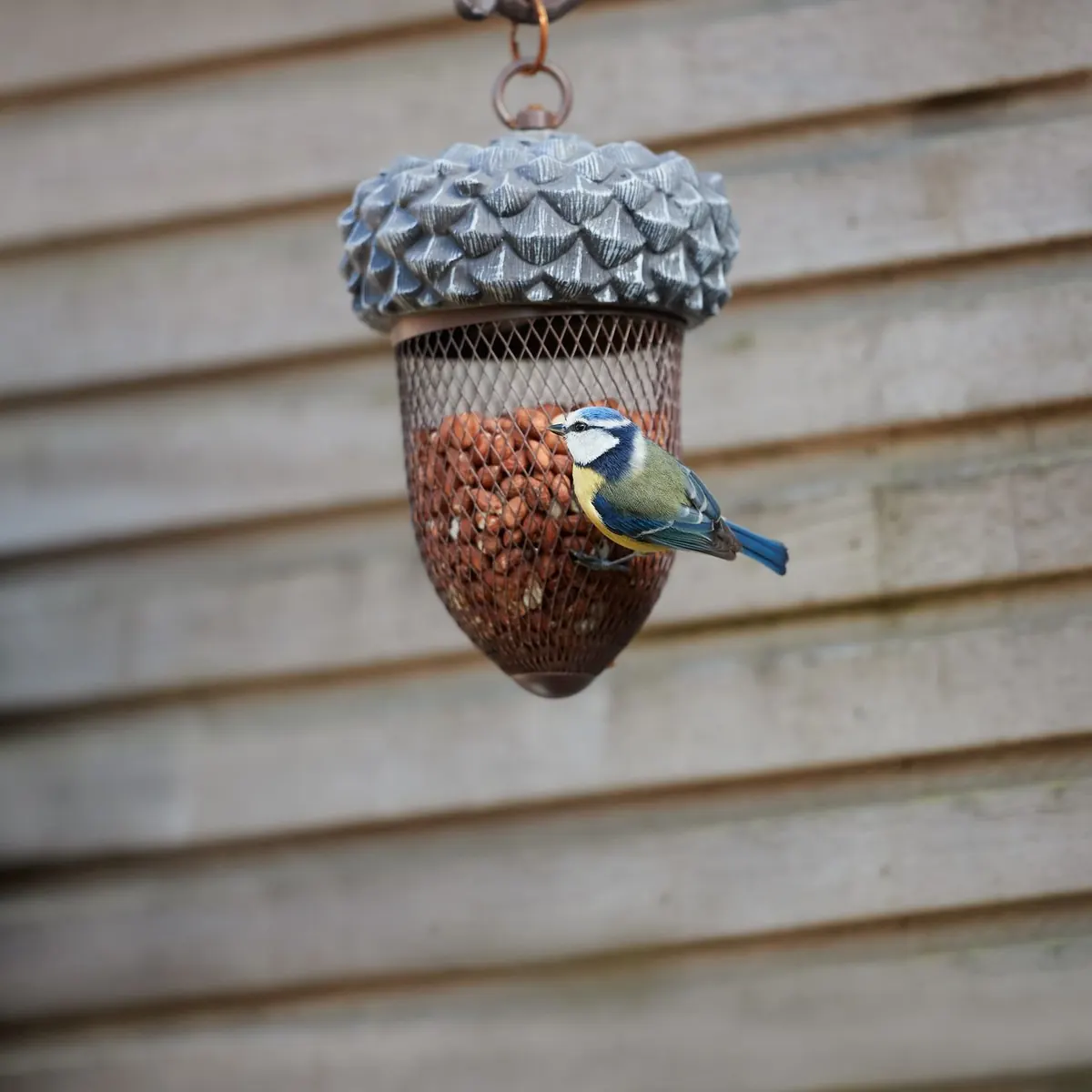
How to Turn a Small Balcony Into a Real Bird Habitat
A balcony eight feet wide and four feet deep is not a compromise. It has a wall, a railing, a corner that blocks the wind, and an edge where the light changes — the same structure that makes a hedgerow useful to birds. What it lacks is depth, and depth is the easiest thing to fake with layers. Arrange plants, water, shelter, and feeders with a little intention, and a narrow slab of concrete starts behaving like habitat.
Start With a Five-Minute Survey
Before buying anything, stand outside and note four things: which way the balcony faces and when sun hits it, where wind funnels (usually along the railing and around the corner), which corner you never use, and what you can see from inside. That last one matters more than it sounds. A feeder you can watch while drinking coffee gets refilled; one hidden behind a tomato cage does not.
Then measure. Subtract the walking path from the usable width. On a balcony under ten feet wide, you might have three feet of planting depth along the railing and one corner of open floor. Work with those two zones and the layout solves itself.
Planters: Build a Thicket, Not a Row
A row of identical pots reads as decoration to a bird. Clustered pots of different heights read as cover. Push three or four containers together so their foliage overlaps, and a sparrow has somewhere to retreat the moment it lands.
Choose the largest pots you can safely stand against the railing. Wide beats tall: an 18-inch-wide planter holds more roots, dries out more slowly, and stays upright in a gust. Balconies on upper floors catch wind that ground gardens never see, so weight and a low center of gravity are practical, not fussy.
Layers do the rest:
- Tall: one small shrub or dwarf tree — serviceberry, viburnum, a dwarf crabapple, or a compact conifer for winter cover.
- Middle: perennials that flower and then go to seed, plus a grass or two for movement.
- Low: something that spills over the pot edge and shelters insects at soil level.
- Vertical: a wall bracket or trellis with a climbing vine adds cover without stealing floor space.
Native plants do more work per square foot, because local insects and birds already recognize them. If you can only manage one, make it a berry-producing shrub — and leave the seed heads standing through winter instead of cutting everything back in October.
Water, the Cheapest Draw
Nothing pulls birds onto a balcony faster than shallow moving water. A dish an inch or two deep with a rough bottom and a few flat stones is enough. Birds need footing and a place to stand, not a swimming pool.
Refresh it daily in warm weather and scrub it once a week; algae and droppings build up fast in a small volume. A solar fountain or a slow drip keeps the surface moving, which catches a bird's eye from farther away and discourages mosquitoes. If water sits more than a couple of days, dump it. In hot, humid spells, a sprinkle of Bti granules — sold for mosquito control — stops larvae from developing without harming birds or other wildlife.
Place the dish between the plants and the railing, on the side you can reach from the door. You want to see it, refill it in seconds, and never step in it.
Shelter and the Glass Problem
Cover does two jobs: it gives birds a safe place to wait, and it breaks the wind that makes a balcony feel exposed. An evergreen in a corner handles both. So does a bundle of twigs — prunings tied together and tucked into a pot or wedged against the railing — which costs nothing and disappears into the planting within a week.
If you want nesting, add one small box mounted on the wall away from the door, facing out of the prevailing wind, and clean it out in late fall. One is plenty on a balcony; two just crowd each other.
The bigger problem is glass. Reflected sky and foliage turn windows into a hazard, and a feeder in the wrong spot makes it worse.
Keep feeders either within three feet of the glass or more than thirty feet from it. The space between is where collisions happen.
Mark the panes themselves, on the outside, with decals, tape, or hanging cord spaced a couple of inches apart. Wide spacing does not register as a barrier to a bird in flight.
Feeder Placement in Tight Quarters
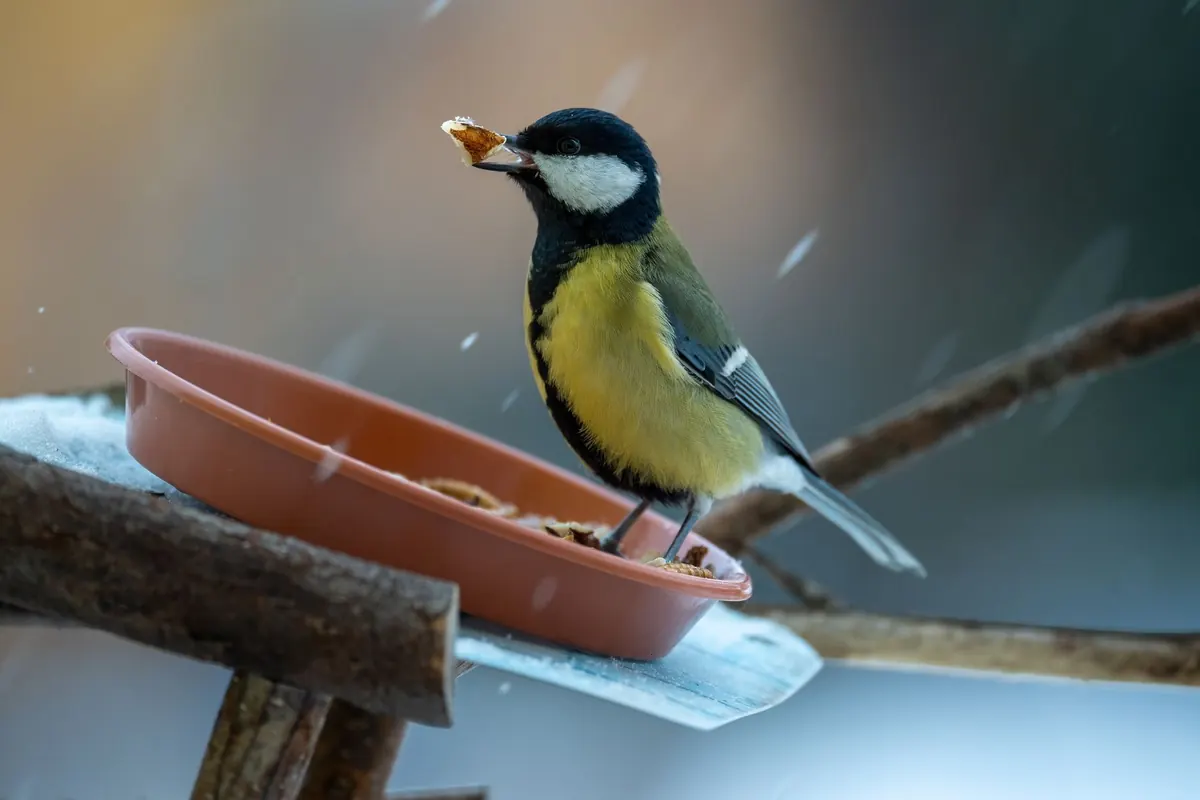
Put the feeder where a bird can reach cover in a single short flight. Three to ten feet from a shrub is a good working distance. Farther out, birds hesitate — especially on an exposed balcony where they can be seen from every direction.
What to offer:
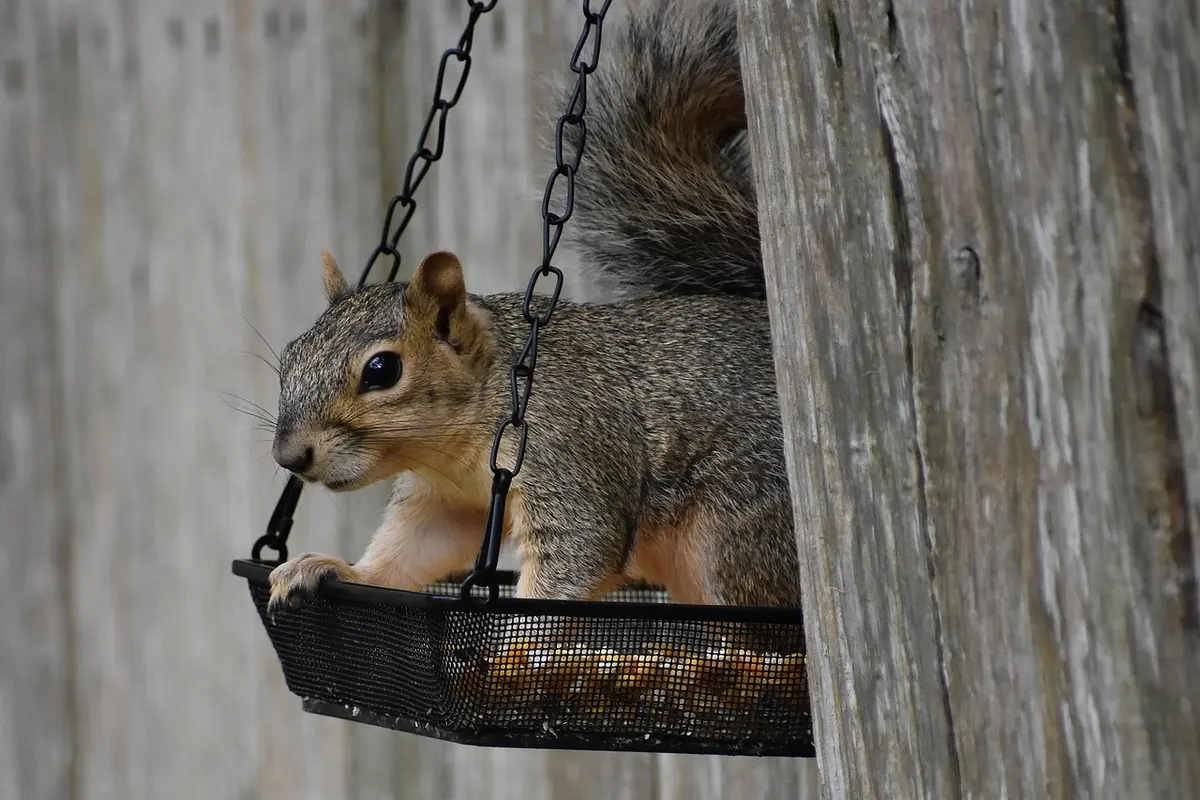
- Black oil sunflower in a small hopper with drainage, or a tray with a screen bottom.
- Suet in a cage through the cold months, when insects are scarce.
- Nyjer in a fine sock if finches already visit. If they don't, skip it.
Pass on heavy mixes full of filler grain. Most of it ends up on the floor below, and it draws a crowd you may not want on a small balcony. Clean feeders every couple of weeks with hot soapy water, rinse well, and let them dry in the sun. If you notice a sick-looking bird at the feeder, take it down, clean it, and wait a week before hanging it again. Hang nothing directly above your water dish or your chair.
A Layout That Fits in Six Feet
Try this arrangement on a balcony roughly six feet wide:
- Set the tallest pot — shrub or dwarf tree — in the corner that takes the most wind. This is your anchor.
- Cluster two or three mid-size pots beside it along the railing, foliage touching.
- Tuck the water dish between that cluster and the railing, on the side nearest the door.
- Bracket the feeder on the wall or railing end closest to the anchor plant, within arm's reach for refills.
- Add the twig bundle or a second small pot at the opposite corner, giving birds a second escape route.
- Leave the door swing, the walkway, and your chair clear. Birds adjust to people; they don't adjust to being cornered.
Watch, Then Adjust
Give it two weeks before deciding anything failed. Note which birds arrive, where they land first, and which way they leave. Those three details tell you whether to move the water, shift the feeder closer to cover, or add one more pot.
Keep the plants off pesticides; the insects on a balcony garden are the food supply. In winter, keep water thawed, suet out, and evergreens untouched. If you rent, check your lease and building rules before clamping or drilling anything to the railing, and check local rules about feeding wildlife.
Most of all, resist filling every square inch. A little bare floor is what makes the rest of it usable — for you and for the birds.
Photo: Erwin Bosman / Pexels